
Helping a Scared Pet Through Fireworks
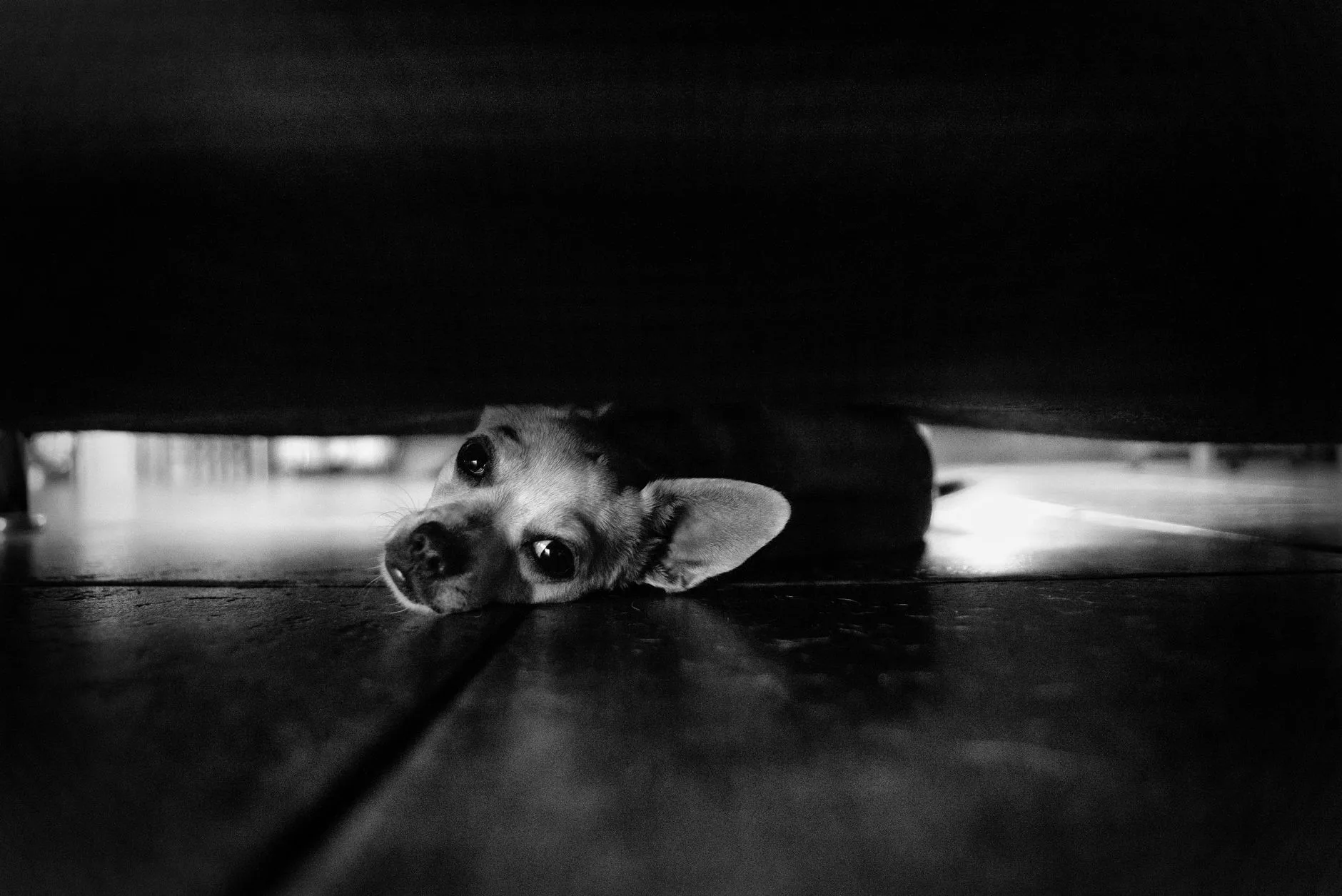
Fireworks season can be very stressful for our animals. Many dogs and cats are scared of the loud banging sounds, the bright flashes, and the unpredictability of when they go off. These pets can include animals who seem calm during the rest of the year.
Knowing the reasons why fireworks are so frightening for animals, along with a good plan, can help ease their fear. This guide will go over a few steps you can take to help your pet feel safe and calm during the upcoming fireworks season.
Why Fireworks Terrify Pets
Compared to humans, cats and dogs hear more sounds, and can hear more range and variation within sounds, and at higher levels. An example is what sounds like a sharp pop to us, could sound like a harsh and overwhelming sound to our pets. In addition to the volume of the sound, the unpredictability of when the next pop or bang will occur keeps our pets in a mental state of high alert.
Some pets can develop a sensitivity and fear to loud noises and can experience lasting fear from just a single bad experience. In any circumstance, the fear is real. The more time passes if we don't do anything to alleviate the fear, it's likely the fear will worsen.
Setting Up a Safe Space
Before the fireworks begin, set up a calm zone in your home where your pet can feel safe. Use a room that is more insulated, such as a bedroom, the bathroom, or a big closet. The idea is to minimize the sound of the fireworks and reduce your pet’s exposure to the light from the fireworks as much as possible.
Put down some of your pet’s bedding, an old shirt that you have worn, and a couple of their toys. Cover the crate with some blankets to provide a dog with a more den like space. Some cats prefer to sit in the high areas of the room or in a covered, enclosed space. Close the blinds, and either play some gentle music or use a noise machine. Let your pet get use to this space, as surprising as the fireworks may be to your pet, they may need to try and get through the fireworks for a while.
While some pet owners find that staying in the space helps, others notice that their pet becomes calmer with no one else in the space. You know your pet better than anyone else.
Step by Step Through Fireworks Night
1. Exercise your dog earlier in the day, before the fireworks begin. A dog that is tired will also be calmer.
2. Feed them dinner before the fireworks begin so they can digest their food, and it won’t be a stressor for them.
3. Bring your pets inside before it gets dark. Even outdoor cats should stay in fireworks nights.
4. Draw the curtains and close the windows. Turn on the radio, tv, or a fan to cover the noise.
5. Let your pet go to their safe space, and don’t make them stay. If they want to move and do something else, let them do that.
6. Stay calm. It will help your pet relax that there is nothing to worry about.
7. Don't reprimand your pet for being fearful, but it is also not a good idea to comfort them because it may reinforce the behavior of fear. Just try to be present.
8. Make sure your pet is properly microchipped and tagged, and keep your phone nearby if they do escape.
What About Calming Products
Numerous products exist in the market that claim to aid in easing pet anxiety, and some do provide relief for specific animals. Pressure wraps, for example, work on the principle of providing gentle, constant pressure, which can be calming similarly to how a baby would be calmed in a swaddle. These calming garments can produce different outcomes depending on the specific pet.
Products such as calming supplements, pheromone diffusers, and pheromone sprays can take the edge off anxiety, and tend to work best if implemented a few days before the anxiety inducing, stressful event. Additionally, for more severe anxiety, these products may not be enough.
If your pet displays extreme fear, and you see it worsening every year, it is prudent to speak to your vet. During certain seasons, some animals will require prescription anti anxiety medication in order to avoid panicking during stressful times. The goal is not to sedate your pet, but to reduce the panic so that it is manageable and does not result in a meltdown.
Long Term Desensitization
You can assist your pet in becoming accustomed to firework noises without the use of an outside stressful season. This can be done by playing tapes of firework noises at a very low volume while your pet does something enjoyable, like eat or play. Over the course of several weeks, you should be able to gradually increase the volume, provided that your pet remains calm.
The process takes a lot of time and consistency. If your pet displays fears at any point, you have increased the volume too quickly and you should lower the volume again. It is very common for pet owners to use this method in conjunction with other methods, as staying fears may be a possibility with your pet.
After the Fireworks End
Once the noise has stopped, you should let your pet decompress on their own. Pet's relax at different speeds, some may take hours to calm down, and some may fully relax in a day. Try to keep things calm and stick to your normal routines as much as you can.
If your pet hid, refused to eat, panting hard, or showed other signs of severe distress, make sure to talk to your veterinarian about this. They can help you make a better plan for next time, and see if anxiety medicine might be a good choice. I know how hard it is to watch them go through it. Copper used to shake all night long before we found a method that worked for him.
It’s okay if your pet struggles during the loud celebrations. You won’t be failing. Fireworks fear is a problem many pet owners must deal with. A lot of preparation, along with patience, can help your pet get through the loud celebrations the best. You will have to plan your strategy a lot in advance. A lot of calmness and consistency are needed during the fireworks.